- Energize Framingham
- Posts
- April 2026
April 2026

Your latest local news on sustainability and climate change action
Subscribe and never miss an issue!
IN THIS ISSUE
Watch for the operating budget hearing this month
A baby step toward preserving Eastleigh Farm
Imagining an enhanced Simpson Park
A mini-forest in South Framingham?
Curbside EV charging sites selected
New courthouse to feature solar and geothermal
Applicants sought for Community Preservation Committee
Upcoming events | In the news
Budget hearing bumped to April, date TBD
The City Council has again voted to extend the timeline for reviewing Framingham’s FY2027 operating budget — our best chance for ensuring that the Chief Climate and Sustainability Officer position, added by the new City Charter, is funded.
The Mayor’s public hearing on the operating budget was bumped from March 30 to sometime later this month, likely after the Boston Marathon.
Ask the Mayor to fund the Chief Climate and Sustainability Officer role
Word has it that the Mayor’s office is looking into a job description and salary for a Chief Climate and Sustainability Officer. But we can’t take for granted it will get into the budget and need you to voice your support!
You can do so in person or on Zoom. Please keep an eye on the city Public Meeting Calendar for the time, location, and Zoom link for the hearing, and watch our Facebook and Instagram channels for announcements. You can also email the Mayor’s office directly at [email protected] or call 508-532-5401 at any time.
Here are some points you can mention:
The new city charter Framingham voted for last fall explicitly calls for a Chief Climate and Sustainability Officer.
This officer would help the city prepare for, minimize, and mitigate spiking energy prices, and save the city money by mapping out long-range projects such as adding solar panels to school and municipal properties.
The officer would help Framingham become a Climate Leader, bringing grants of up to $1 million or more to the city. These grants, plus other grants secured by the officer, would more than cover their salary.
Having this executive-level officer will allow climate and sustainability to be factored proactively into all city planning and decision making, encompassing land use, procurement, finance, building projects, transportation, and more.
At least six other Massachusetts cities already have a chief climate officer or independent climate or sustainability department, including Cambridge, Somerville, Medford, Newton, Boston, New Bedford, and Worcester.
What about the current Sustainability Coordinator position?
We think this position, currently held by Shawn Luz, should also be retained. There's more than enough work for two people!
The coordinator position could be focused on research, data collection, and ongoing project management, while the chief position would be focused on long-range strategic planning, goal setting, initiating sustainability projects, leading education and community outreach, and applying for sustainability and climate grants with support from the coordinator.
Luz alone has brought in about $1 million per year in green community grants, more than enough to support two positions. However, Framingham has missed out on some grants in the past few years due to lack of bandwidth. Imagine how many opportunities we could seize with two officers collaborating!
Of note, Wayland, Lexington, and Beverly each have two-person departments, Somerville has nine people, and Worcester has 10.
A baby step toward preserving Eastleigh Farm
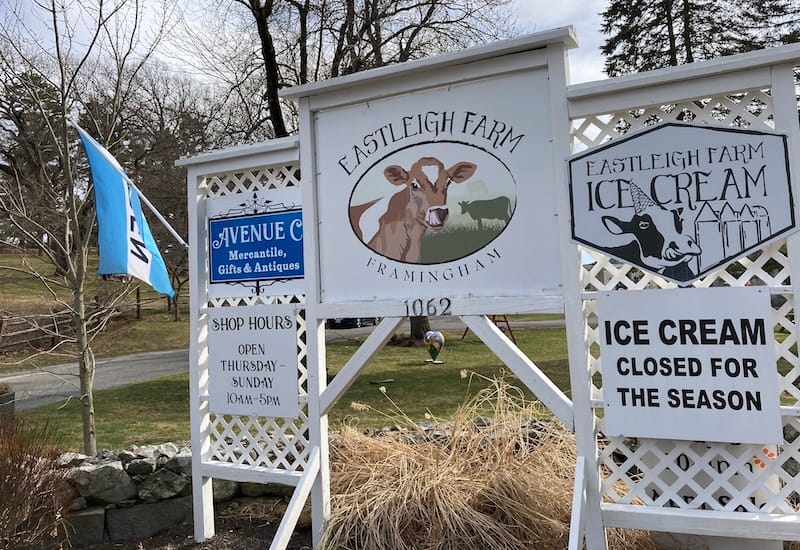
The Community Preservation Committee (CPC) took a partial step toward preserving Eastleigh Farm at its final meeting on this years’ funding applications in March.
The farm’s owner, Doug Stephan, originally asked the CPC for $3 million to go toward purchase of his land as an agricultural or conservation restriction. Stephan later reduced his request to $1.2 million, to preserve just 80 of the farm’s 112 acres.
In the end, the CPC recommended putting $500,000 toward preserving “approximately 100 acres” of the farm as a gesture of support, with the understanding that Sudbury Valley Trustees, the Massachusetts Department of Agriculture Resources, and a state Landscape Partnership Grant may provide additional funding. The project would include a trail easement connected to Callahan State Park.
“This is not the amount we requested, but it does show some commitment that the city is interested in protecting this land,” said Sarkis Sarkisian, Framingham’s director of Planning & Community Development and a supporter of the proposal.
City Councilor Mary Kate Feeney, whose district includes Eastleigh Farm, noted that farmland is fast disappearing in Massachusetts, and that farms play a critical role in the fight against climate change. “We’ve got to figure out how to preserve the entire farm,” she said. “This is not the last step, but the first step.”
Meredith Houghton, senior land protection specialist for Sudbury Valley Trustees, also spoke in favor of the project. “A lot of different elements are still being worked out,” she said. “SVT is a strong partner, but there’s more to come and we want to be a part of that.”
CPC member Steven DeNicola noted that CPC funding is very restricted, adding that much of the project is outside of its control.
CPC Vice Chair Karen Margolis agreed: “I think there will be opportunities for us to take another bite. The property is not even defined as to what is in and what is not in. We were getting differing opinions and never got a firm plan to show what we were supposedly buying.” She also noted that an appraisal is still needed on the property.
CPC Chair Thomas Mahoney argued that $500,000 is too low, and abstained from the final vote, which was 7-0 in favor of recommending the grant. The CPC left the conditions of the grant up to the City Council, which will vote on the CPC’s recommendations this spring.
More coverage in the MetroWest Daily News.
Imagining an enhanced Simpson Park

The design study will include bridge reconstruction. The Mass Pike can be seen in the background.
Anyone who’s driven down Central Street may have noticed the sign for Simpson Park, but not any obvious way to access the park itself. In an 8-0 vote in March, the Community Preservation Committee recommended allocating $250,000 of its funds for a design study to improve the park, which lies on city-owned land.
It’s an odd piece of land to be sure — no parking, not even a crosswalk for pedestrians to safely get to it. It includes a decrepit bridge that is widely viewed as in danger of collapse, and it runs alongside the Mass Pike (the trail even goes right up to the highway).
But the park also offers direct access to the Sudbury River, unusual in Framingham despite the river running through it. Ron Chick, a proponent of trails in Framingham, spoke of a possible future access point for canoes and kayaks. The CPC’s Judy Grove suggested that the MWRTA could include a bus stop at the park, making it maximally accessible.
The decision now goes to the City Council. At least one Councilor, Michael Cannon of District 4, has expressed his strong interest in the project, which is in his district.
A mini-forest in South Framingham?
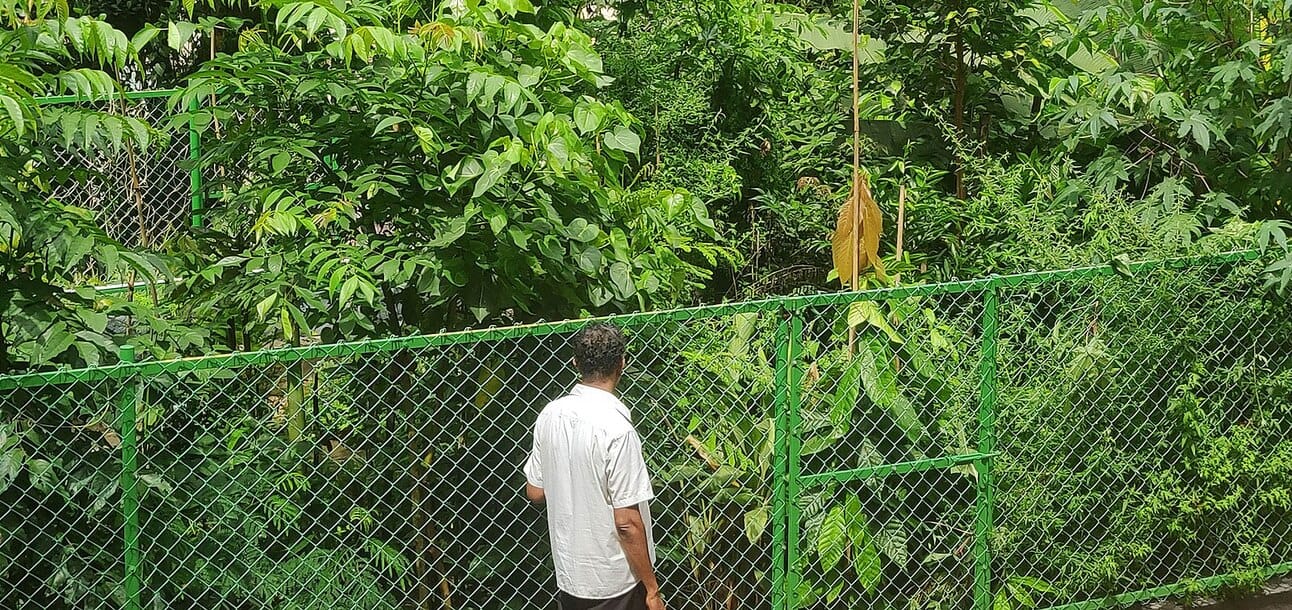
A Miyawaki forest nine months after planting. Credit: Berman Herish/Wikimedia Commons
In 2023, Framingham Salvage Company agreed to pay an $85,000 settlement for alleged discharge of industrial stormwater into Beaver Dam Brook. State officials directed $60,000 of that sum toward the Communities Responding to Extreme Weather (CREW) program with the aim of improving water quality in the Beaver Dam Brook watershed.
CREW has approached Framingham about spending that money to re-green a site in South Framingham, location to be determined. Together with partner organizations Biodiversity for a Livable Climate (Bio4Climate) and Regenerative Design Group (RDG), their vision is to de-pave the chosen area — remove the concrete or asphalt — and engage with the community to plant a mini forest using the Miyawaki method.
Miyawaki forests are dense, multi-layered mixes of native trees and shrubs. Just 1,000 to 10,000 square feet in size, they thrive in urban settings. Once established, they provide many benefits: They absorb stormwater, preventing polluted runoff from contaminating bodies of water; they cool the area; and they absorb carbon from the atmosphere.
You can find Miyawaki forests in Cambridge, Watertown, and Worcester and at Natick High School, Belmont High School, and Somerville High School. Typically, community members hold an event to plant the seedlings. The municipality then provides initial upkeep, for about a year. After that, the forests become self-sustaining.
CREW has investigated several potential South Framingham locations and has held initial discussions with a variety of organizations and officials, including Framingham Sustainability Coordinator Shawn Luz, City Councilor Tracey Bryant, Energize Framingham, Transition Framingham, Sudbury Valley Trustees, and the Framingham Sustainability Committee.
We see CREW’s offer as a great opportunity to cool areas of South Framingham that have little tree cover and to involve the community. We look forward to further discussions and supporting the project however we can. Watch for further updates!
BRIEFS
Curbside EV charging sites selected
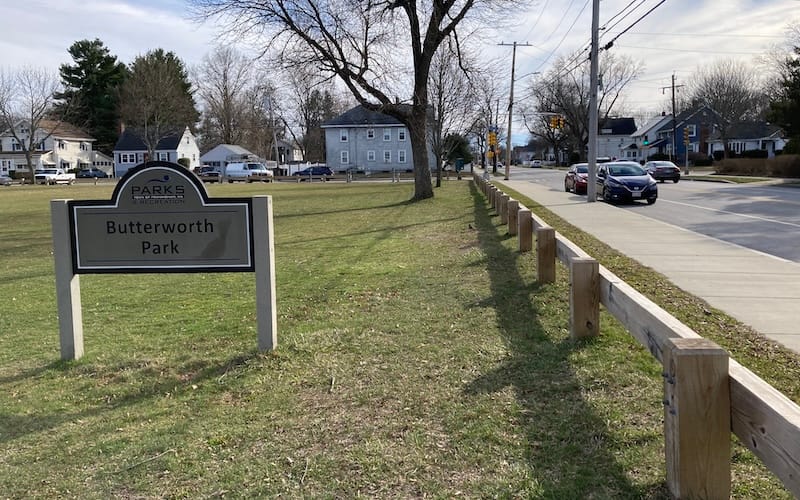

Butterworth Park and Lincoln Street next to the Framingham Public Library are the sites selected for new curbside electric vehicle charging stations. Sustainability Coordinator Shawn Luz shared the news at a joint meeting of the Framingham Sustainability Committee and City Council Subcommittee on Environment and Sustainability Committee on March 11.
The stations will be installed under a $500,000 grant from the Massachusetts Clean Energy Center (CEC).
New courthouse to feature solar and geothermal

Source: Finegold Alexander Architects via mass.gov.
The planned Framingham Regional Justice Center, to be built on the former Danforth Museum site, will house Framingham’s District Court, Juvenile Court, Probate & Family Court, and Housing Court. Paid for by the state, it’s designed to meet Massachusetts decarbonization goals.
The all-electric, three-story building will include an energy-efficient design, geothermal wells for heating and cooling, solar panels, and sustainable construction materials.
The city advises that the Main Public Library parking lot will be unavailable during demolition of the former Danforth Museum, slated to begin this month.
Applicants sought for Community Preservation Committee
The Framingham City Council is seeking applicants to fill one At-Large position on the Community Preservation Committee starting on July 1, 2026. The deadline to apply is May 1, 2026. Interested residents may apply online.
UPCOMING EVENTS
Stay updated about events by visiting e. You can sign up for email notifications by creating a profile (“Sign In/Join” button on the top right corner on the page).
Thurs., Apr. 9, 8 a.m.-12 p.m. MassEnergize Post-Conference Deep Dive Workshop: Social Media & Outreach in Action
Bentley University, Waltham ($85 if attending the MassEnergize Climate Leaders Conference)
Fri., Apr. 10, 11 a.m. Protect Your Nonprofit from Rising Electricity Prices with Solar Energy (online)
Join Green Energy Consumers Alliance to learn about the financial, environmental and public health benefits of solar. We'll review recent economic research and the different financing pathways available to nonprofits. Register
Fri., Apr. 10 to Sun., Apr. 26: Great Framingham Cleanup 6.0
Keep Framingham Beautiful announces its 6th annual Great Framingham Cleanup.
Do a cleanup on your own, organize a small group, or join one of KFB's three group cleanups (see link).
Mon., Apr. 13, 12 p.m. The Carbon Cost of the Internet (virtual)
Data centers enabling digital activity accounted for 4.4 percent of American energy consumption in 2023. The growth of AI is expected to cause that to double or triple by 2028. What can we do to help reduce this carbon footprint? Sponsored by the Mass Climate Action Network. Register
Mon., Apr. 13, 7-8:30 p.m. Environmental and Climate Justice with John Walkey (virtual)
John Walkey, a committed advocate for environmental justice, will share his work with Greenroots and a coalition of organizations to establish a microgrid for Chelsea. Sponsored by the Jewish Climate Action Network. Register for Zoom link
Wed., Apr. 22, 7 p.m. Heat Pumps 101: Great Heat and Cooling, New Incentives (Webinar)
Get heat and AC all in one, new heat pump electric rates lower operating costs.
Sat., Apr. 25, 11 a.m.-3 p.m. FRAMINGHAM EARTH DAY FESTIVAL
Framingham Centre Common (at Edgell Road/Vernon Street).
Stop by Energize Framingham’s table! Rain date May 2, 11 a.m.-3 p.m.
SAVE THE DATES
May 1 through September 1: Art on the Cochituate Rail Trail
The trail will transform into an open-air gallery featuring eight unique installations by talented local artists.
Sat., May 30, 10 a.m.-12 p.m. Cooler Communities Fair
Location TBD. Students from Framingham Public Schools will create displays on a variety of climate and sustainability topics.
Thurs., Jun. 18, 3-7 p.m. Framingham Farmer’s Market opens
Framingham Centre Common, Edgell Road and Oak Street.
The market will take place weekly through early October 2026. Apply to be a vendor.
IN THE NEWS
Framingham/Metrowest
Framingham MA mayor delays budget hearing until April. What to know (MetroWest Daily News) (See first story above for why we’re focused on the budget!)
Framingham’s Sustainability Coordinator Reflects on First Year of Community Electricity Program (The Frame)
Framingham farm awarded $500K for preservation efforts. What's next (MetroWest Daily News)
Framingham MA board, longtime dairy farm are at odds over CPA funding (MetroWest Daily News)
Will housing make Ashland Superfund site safer? Why developer says yes (MetroWest Daily News)
A 40B housing proposal in Ashland is drawing criticism from some residents and town officials concerned about its proximity to the Nyanza Superfund site.
Massachusetts/Region
Worcester restricts outdoor water use as Mass. drought deepens (Boston Globe)
Despite the winter’s snowfall, the Massachusetts Water Resources Authority declared a Level 3 Critical Drought in central and northeastern Massachusetts. Lower-level drought has spread across the state except for Martha’s Vineyard.
Some cities and towns are helping consumers save 10 percent on electricity. Here’s what to know. (Boston Globe)
How municipal electricity aggregation plans are saving consumers money. Framingham is among the almost 70 percent of Massachusetts towns offering municipal aggregation plans.
Tucked in House energy bill, a ‘big breakthrough’ on competitive electric suppliers (CommonWealth Beacon)
Part of the energy bill that recently passed the Massachusetts House would allow individual communities to ban competitive electric suppliers. These suppliers entered the market in the 1990s due to deregulation. Many have predatory practices, locking unsuspecting customers into higher rates, making it hard to cancel contracts, and targeting vulnerable populations.According to a 2025 report, 16 percent of Massachusetts households purchase energy from competitive suppliers.
The Solar Industry Has Been Bogged Down by Red Tape. Digital Tools Are Changing That. (Sierra Club)
The current regulatory landscape makes it harder for people to go solar. At least 125 Massachusetts jurisdictions, including Framingham, still require solar installers to apply for permits in person. Two organizations, Symbium and SolarAPP Foundation, offer software that enables municipalities to process permit applications quickly.
Balcony solar bills make inroads across New England (Canary Media)
All six New England states are advancing legislation allowing DIY, plug-in solar panels. Plug-in solar is part of a sprawling energy bill approved by the Massachusetts House of Representatives and working its way through the Senate.
My all-of-the-above approach will lower energy costs and advance our climate goals [opinion] (CommonWealth Beacon)
Massachusetts Gov. Maura Healey argues that bringing more energy to Massachusetts is a top priority, and we can do that while investing in energy storage, geothermal, and exploring nuclear power.
Massachusetts mandates 15-month permitting deadline for solar and storage (PV Magazine)
Gov. Healey signed an executive order that sets a 15-month limit for final state and local permitting decisions on large-scale solar installations, battery storage, and virtual power plants to meet peak electricity demand. Current project timelines often exceed three years.
Massachusetts governor signs executive order for 10 GW of new energy (Solar Power World)
Another executive order calls on state agencies to meet the state’s energy demands, with directives related to solar, storage, wind, load management, gas, nuclear and geothermal.
Vermont’s Landmark Climate Superfund Law is Headed to Court (One Earth Now)
In 2024, Vermont passed the first law holding major fossil fuel producers liable for their past greenhouse gas emissions, requiring them to help pay for climate change adaptation projects. Now, court challenges aim to strike the law down immediately. The litigation will likely take years to play out and could go before the Supreme Court. Nearly a dozen other states, including Massachusetts, have climate superfund bills under consideration.
Construction finishes on a major Massachusetts offshore wind farm, the first during Trump's time in office (PBS NewsHour)
Vineyard Wind was completed in March, after the Trump administration halted construction.
Hochul Moves to Delay and Alter Climate Law, Citing Energy Prices (New York Times)
The New York governor’s proposal, currently being considered by the Legislature, would put off regulations for enforcing the law until 2030.
National/General Interest
Iran war energy shock sparks global push to reduce fossil fuel dependence (Reuters)
Policymakers around the globe are rethinking ways to reduce long-term dependence on oil and gas imports, with proposals to expand nuclear energy and renewables, grow strategic stockpiles and domestic production, and diversify foreign sources of supply.
Now Is the Perfect Time to Buy an Electric Vehicle [opinion] (New York Times)
You can save real money while doing a small part to help stabilize the climate and reduce the risk of future conflicts in fossil-fueled nations like Iran and Venezuela, the writer argues. The five best-selling electric vehicles in the United States all cost less than the national average for a new car.
Used EVs are a bargain right now — and buyers are noticing (Canary Media)
Used models are more plentiful and cheaper than they’ve ever been. That’s a big opportunity as gas prices surge. The average cost of a used EV is now within about $1,300 of a comparable gas vehicle. Many used EVs with decent range are coming off leases.
Affordability agenda pulls blue states from green goals (Politico)
The states that had taken the biggest swings at cutting emissions during the Biden administration, especially blue states on the East Coast, are now pulling money away from programs to save power and boost renewables to instead cut utility bill charges and offer energy rebates .
States are lifting bans on nuclear power (Canary Media)
After decades of aversion, states are welcoming in nuclear developers as a way to meet surging electricity demand without fossil fuels. Massachusetts, Vermont, New Jersey, Minnesota and California are weighing legislation to overturn their bans. Connecticut has eased restrictions on small modular reactors and Rhode Island is allowing utilities to buy electricity from neighboring states’ nuclear plants. Five other states have fully lifted their moratoria since 2016.
How next-gen nuclear could help meet energy demands (PBS NewsHour)
Senators Demand to Know How Much Energy Data Centers Use (Wired)
Sens. Elizabeth Warren and Josh Hawley press the Energy Information Agency to mandate annual electricity disclosure for data centers.
ABOUT US
Energize Framingham provides climate education, outreach, and advocacy to promote a healthy, equitable, and resilient community.
Have a tip for us? Email [email protected].
In case you missed it… Back issues!
Editors: Nancy Fliesler and Aimee Powelka
