- Energize Framingham
- Posts
- February 2026
February 2026
Your latest local news on sustainability and climate change action
Subscribe and never miss an issue!
IN THIS ISSUE
Upcoming budget hearings: Will Framingham get a chief climate officer?
Sustainability scorecard: State of the City address
Can Eastleigh Farm be saved from developers? Questions on CPC open space proposals
State update: Mass Save under threat; setback for Climate Superfund Act
Where are my heat pump credits?
Composting savings to the city | Volunteers needed for Potter Road composting
Park, trail, and pond improvements
City Council forms new Environment and Sustainability subcommittee
Best practices on using salt this winter
Upcoming events | In the news
Budget hearings: Time to call for a chief climate officer, solar installations
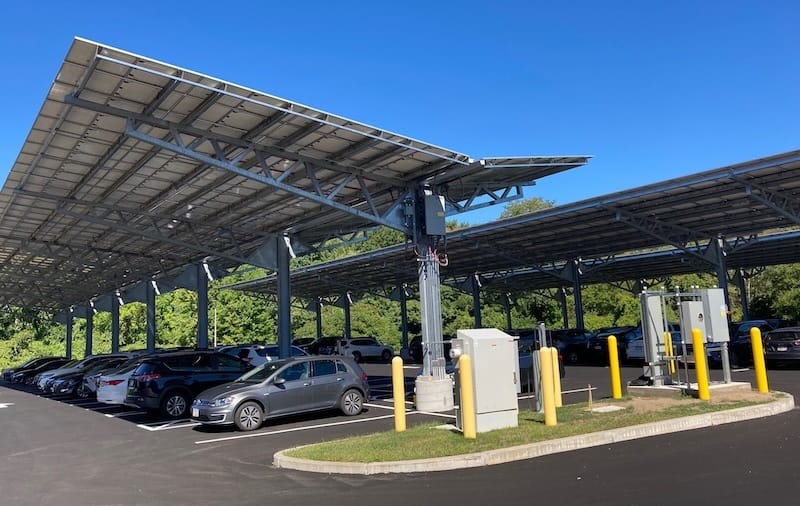
Solar canopies at Fuller Middle School. Could we get more solar projects into the city’s five-year Capital Improvement Plan?
Getting a Chief Climate and Sustainability Officer into the new City Charter was a huge triumph for Framingham, opening a path toward executive-level leadership working across all city departments. This position will also be crucial in finalizing the city’s Climate Action Plan and Municipal Decarbonization Roadmap, making Framingham eligible for more grants. While we’re told the Sisitsky administration is already researching job descriptions and wages for the climate officer, there’s no guarantee the position will be included in the FY27 city budget.
In addition, the mayor’s current Capital Improvement Plan, now under review by the City Council’s Finance Subcommittee, makes no specific mention of solar projects (except for the installation at the Farley Administration Building, now set for 2028). The five-year plan includes budget items for roofs for multiple municipal and school buildings – an ideal time to incorporate solar panels when feasible. We’re urging that solar be included in the budget, at least in the roof design phase.
Opportunities to speak up
The city’s budget hearings over the next several weeks present opportunities to give public comment and share your views. You can also write to your City Councilor directly (find your district | find your Councilor).
The City Council will soon hold a public meeting and vote on the Capital Improvement Plan. The meeting date is unclear, but it’s our best opportunity to voice support for capital projects such as solar installations. We suggest checking the city Public Meeting Calendar often if you wish to comment live. (Talking points on solar below.)
On February 23 (time TBD), the Mayor is intended to hold a public hearing on the operating budget. This is likely the best opportunity to voice support for adding the Chief Climate Officer position. At this writing, the operating budget for FY2027 has not yet been posted, but would be found on the city’s Budget Central page. Again, the date may shift; check the city Public Meeting Calendar to confirm.
Other opportunities for public comment include:
Tues., Mar. 3: Mayor presents the operating budget to the City Council
Tues., Mar 17: The City Council will refer the operating budget to the Finance Subcommittee, which will then have 28 days to report back.
Again, double check these meetings on the city Public Meeting Calendar and get agendas and Zoom links.
Talking points for public comment, letters, and emails
Chief Climate and Sustainability Officer
The current Sustainability Coordinator position held by Shawn Luz, which we hope will remain, is within the Capital Projects & Facilities Management department so is limited in scope. In contrast, the Chief Climate and Sustainability Officer would be an executive reporting to the mayor, empowered to work across city departments.
Having a dedicated chief climate officer would allow climate and sustainability to be factored into all city decision making and long-range planning – land use, procurement, finance, new building projects, transportation, and more.
The position would inform capital improvement projects, such as adding solar panels to school and municipal properties, and would help the city take advantage of funding opportunities and potential savings.
At least six other Massachusetts cities already have a Chief Climate Officer or an independent climate or sustainability department, including Somerville, Medford, New Bedford, Newton, Boston, and Worcester. Some, like Worcester and Natick, have a separate Sustainability Department with a department head.
Solar installations
Solar is fast growing nationwide as an energy source. The economics have become very favorable for solar roofs and canopies as electricity prices rise. Investment now will likely save the city money over time.
The city’s capital improvement budget calls for many new roofs. When there is sufficient sunlight, roof construction is the most cost-effective time to install solar panels. Similarly, repaving parking lots is an ideal time to consider adding a solar canopy, which also provides shade.
In addition to direct capital investment, the city could consider other options to add solar, such as power purchase agreements in which third parties install and own the panels and the city buys solar electricity at a lower rate.
Sustainability scorecard: Mayor’s State of the City address
Mayor Charles Sisitsky’s State of the City address January 29 touched on a few sustainability advances and plans. Notably, the M ayor made no mention of the passage of the Specialized Building Code, a big 2025 win for Framingham that will minimize carbon emissions by new buildings and help their residents save on energy costs.
Nor did the Mayor mention the new Chief Climate and Sustainability Officer position added to the City Charter. At the Candidates Climate Forum last fall, the Mayor expressed support for the position and said it would report directly to him. Let’s fill it this year! See the budget story above for guidance on how to voice support for this role.
Some things Mayor Sisitsky did mention:
New roofs, with solar plans uncertain
The Mayor noted that the city is focused on roof replacements at the Department of Public Works, fire station 7 on Water Street, several schools, the former Marian High School, and other buildings. He added that a new roof is being completed on the Memorial Building, and that replacement of the roof at Loring Arena will begin shortly.
“The completion of the new roofs on many of our buildings will accommodate future solar panel installations,” he said.
Our take: While making roofs solar-ready is a good goal, we hope to see the city budget for as many solar roofs and canopies as possible on school and municipal properties in tandem with budgeting for roof and parking lot design and/or construction. Again, see the budget story above on how you can voice support for solar.
Mary Dennison Park cleanup, with artificial turf in the plans
Remediation of Mary Dennison Park on Beaver Street is now well underway, the Mayor reported. The park is built on the site of a former dump, and in 2014, testing revealed high levels of contaminated soil, primarily lead, throughout its 15 acres. In early 2024, the City Council approved funds enabling remediation to move forward. Avery Dennison Corp., which used the site as a dump, is also paying some of the cost.
The contaminated soil has now been removed. Plans for the park include an accessible playground, fitness area, picnic pavilion, athletic fields, and handball and basketball courts.
Unfortunately, the plans call for synthetic turf instead of grass. While synthetic turf is cheaper to maintain, it has multiple drawbacks outlined by Energize Framingham’s Larry Stoodt before the City Council Public Health, Safety & Transportation Subcommittee in June 2024 (starts at 9:26). It is much hotter than grass so can cause burns; it replaces cooling green space that helps absorb carbon from the air.; it emits greenhouse gases and contains plastics and chemicals of varying toxicity.
In short, we hope the city will not use artificial turf. More background on artificial turf from the Massachusetts Sierra Club.
Other developments cited by the Mayor:
A revived tree planting program, using Community Development Block Grant funds to plant nine new street trees downtown and 12 setback trees in eligible neighborhoods.
Completion of the Waushakum Beach stormwater outfall project, which will allow contaminants to be filtered out before they enter the pond.
State trails grants made possible through Framingham’s compliance with the MBTA Communities Act, including improvements to the Carol Getchell Nature Trail and phase one design on the Bruce Freeman Trail.
A successful fourth season of the Framingham Farmers Market. The market is now largest in the state by vendor count according to the Massachusetts Department of Agricultural Resources, perhaps because there is no weekly vendor space fee. In 2025, it averaged 77 vendors and food trucks weekly, and attendance rose 17 percent, topping 30,000 visitors.
Can Eastleigh Farm be saved from developers? Questions on open space proposals
Since 2020, under the Community Preservation Act (CPA), the City of Framingham has used property tax surcharges, matched by the state, to fund projects related to open space, outdoor recreation, housing, and historic preservation. The Community Preservation Committee (CPC) has been considering project selections for the coming year, and will hold a public hearing March 23 to finalize its program.
Several open space projects of high local interest have been coming under scrutiny as the CPC does its homework.
Eastleigh Farm

At its February 12 meeting, the CPC reviewed a request to contribute $3 million for the purchase of Eastleigh Farm, located on Edmands Road in northeast Framingham.
Proposed by Sarkis Sarkisian, director of Planning & Community Development, the purchase would permanently protect 112 acres of pasture, tillable farmland, woodlands, and wetlands from being developed commercially. The plan includes a trail connection to Callahan State Park. Sarkisian said that Eastleigh is the largest piece of unprotected, privately owned land in Metrowest.
Sarkisian and Doug Stephan, the farm’s owner of 25 years, hope to combine the $3 million from the CPC with $1.7 million from the Massachusetts Department of Agricultural Resources (MDAR), $1 million from the Sudbury Valley Trustees (SVT), a state Landscape Partnership Grant, and a potential federal match to the MDAR grant.
Together, these funds would enable purchase of the farm from Stephan for $7,450,000, allowing him to pay off his mortgage. The wrinkle is that the other funds are not guaranteed or have contingencies. For example, SVT would have to go before its board and see another presentation of the total package before committing its portion.
CPC members expressed concern about the large sum requested and that the committee would tie up $3 million of its limited funds only to see the other parts of the deal fall apart. Sarkisian suggested the CPC could work with the city to issue a bond to pay for its part of the purchase.
The meeting became tense at times. Stephan stated that if he doesn’t get the full purchase amount to pay off his mortgage, he would have to sell off some of the land to developers.
CPC member Judy Grove noted that this would be CPC’s first bonded project. “That’s going to take money from every one of our projects for 20 years,” she said.
CPC Vice Chair Karen Margolis questioned the appraisal behind the stated $7,450,00 purchase price, and whether that is truly the fair value of the land.
Several people testified to urge the CPC to commit its funds.
“This property has been under threat of development for at least the past 25 years,” said Linda Kirchman, speaking as a member of the Agricultural Advisory Committee. She argued that Framingham risks the land being developed or foreclosed on, with the city losing any say in how much is preserved. “Once the soils are gone, once the trees are gone, there’s no going back,” she said.
The CPC members agreed on the importance of preserving the land. They will explore bonding and other options in the coming weeks.
43-45 Nixon Road
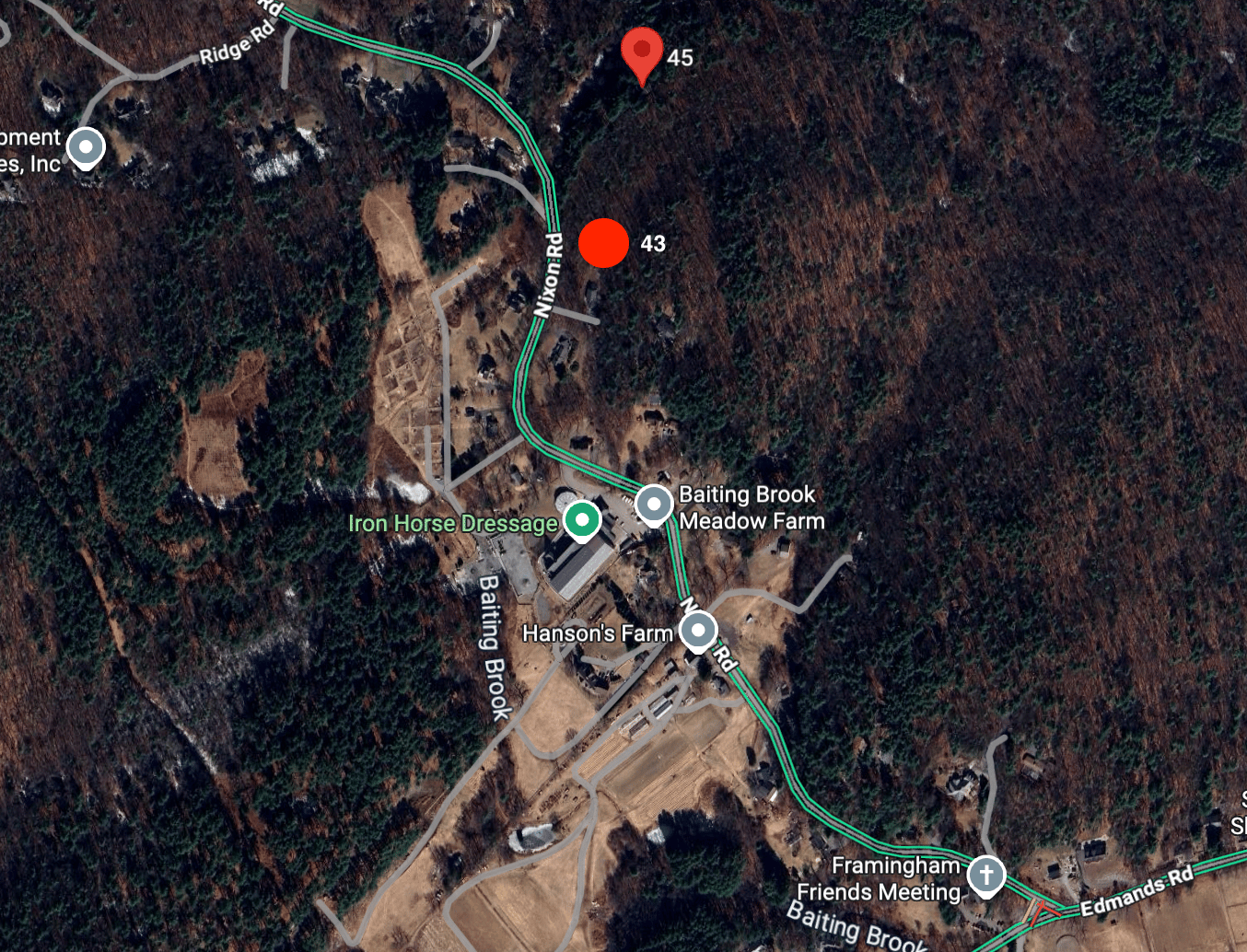
This $250,000 project, also submitted by Sarkisian, would also involve a land purchase. It would protect nine acres of land at 43-45 Nixon Road, also known as the Ford Estate, from development and enable creation of trails to connect to the regional Bay Circuit Trail.
The CPC had initially voted to reject the project due to lack of a site plan and a signature from the property owner, but agreed to hear an updated presentation from Sarkisian on February 12 and rescinded its prior vote.
On February 12, Sarkisian presented more complete data and argued that the purchase of the 9 acres would enable the Sudbury Valley Trustees (SVT), a partner on the project, to protect a neighboring 14.5 acre parcel. The SVT has an appraisal of the land in process.
Some CPC members wanted to see that appraisal, and were concerned about tying up $250,000 if the purchase was contingent on SVT’s parcel being protected. Others pointed out that the CPC would have three years to use the money and would get it back if the deal fell apart.
A member of the public noted that land purchases are often complicated, as with the proposed Eastleigh Farm purchase, but called on the CPC to move ahead. Another resident who hikes in the area noted that the acreage, “a very cool piece of land,” is key to connecting the Nobscot area with Callahan State Park, avoiding the need to walk along the road.
Simpson Park upgrade

This $300,000 project would create a design plan to improve access to Simpson Park, located alongside the Sudbury River near the intersection of Central Street, Fenwick Street, and Haynes Street. Sarkis Sarkisian, Framingham’s director of Planning and Community Development, said the funds would go toward designing a four-car parking area and walkway and providing safer pedestrian access from Central Street.
The CPC had earlier voted against the project because it lacked a specific departmental sponsor, among other issues. However, Sarkisian and District 4 City Councilor Michael Cannon persuaded the CPC to rescind that decision, so the CPC took the project up again at its February 12 meeting.
Technically, the new parking area for Simpson would be on city-owned land designated as residential (there is a house in that location, just before a Mass Pike underpass). Sarkisian is going before the City Council on February 18 to redefine that land as recreational. Other issues raised included the need to inspect a bridge within the park and the need to cut down trees.
Sarkisian acknowledged there would be permitting difficulties, but he felt the timing is good since construction is already planned for Central Street. He and Cannon noted that Simpson Park is District 4’s only park and one of the few places where residents can access the Sudbury River waterfront.
Carol Getchell Trail’s middle section

As we reported earlier, the north and south sections of the Carol Getchell Trail, running behind Stapleton Elementary and Cameron Middle School, have been redone with boardwalks to make them ADA-accessible. The CPC had initially approved $315,000 to construct the trail’s middle section, but at its February 2 meeting considered a request to postpone funding construction for a year.
The request, from Steven Weisman, an abutter and frequent trail user, would give time to review environmental impact data from the north and south sections, informing the middle section’s design. Weisman noted that construction of the north section involved digging a long trench, severing tree roots, and filling the trench with aggregate material.
Ron Chick, a long-time supporter of the trail, as well as Sean Silk, a member of Friends of Framingham Trails, urged proceeding with the middle section, arguing that seniors, parents with strollers, and people with disabilities cannot now walk the full trail. After some discussion, the CPC declined to take a vote, leaving their prior approval as-is.
Interested in weighing in on any of these projects? Attend the CPC’s public hearing on March 23.
STATE LEGISLATIVE UPDATE
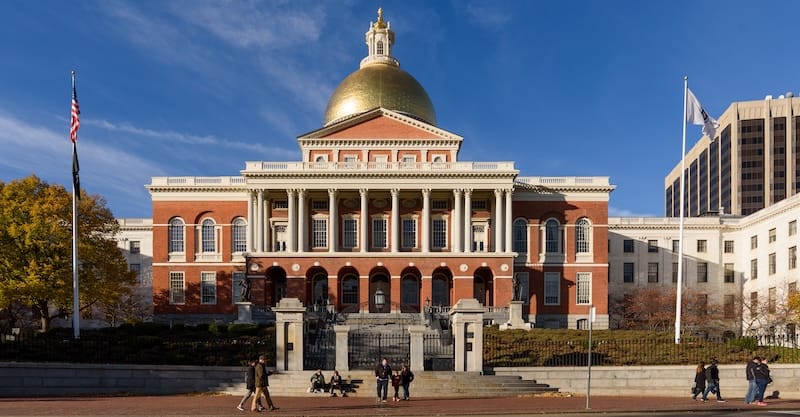
(Credit: King of Hearts/Wikimedia Commons)
Mass Save under threat
The House Ways and Means Committee is redrafting bill H.4744, “An Act Relative to Energy Affordability, Clean Power and Economic Competitiveness,” in a way that would drastically weaken Mass Save consumer energy efficiency incentives.
The effort modifies Gov. Maura Healey’s original 2025 energy affordability bill. It would roll back the state’s 2030 emissions goal commitment, cut Mass Save’s budget by $500 million, and soften requirements to reduce carbon emissions. The effort is led by Rep. Mark Cusack (D-Braintree), co-chair of the Joint Committee on Telecommunications, Utilities, and Energy.
The bill cleared Cusack’s committee, but pushback from climate and environmental groups managed to postpone a floor vote last year. Now, because of political pressure around soaring energy costs, parts of the bill are back in consideration, with closed door meetings. The bill is currently with the House Ways and Means Committee, and it’s believed a new version will be sent to the House for a floor vote in the last week of February or early March.
Lobbying is underway by utility and real estate interests to defund Mass Save, which shows up on utility bills under the heading “Energy Efficiency Charge,” claiming it to be too expensive. But Mass Save is actually an affordability solution that has been lowering household energy bills through better insulation, weather sealing, and energy efficient equipment like heat pumps, solar panels, and batteries.
According to the Acadia Center, Mass Save incentives have provided more than $3.40 in consumer benefits per every $1.00 invested. According to the Mass. Department of Energy Resources, energy efficiency upgrades save money for all residents by reducing the peak load on the Massachusetts grid, when electricity is more expensive.
Last but not least, Mass Save is not the reason our energy costs have been rising. Much of the increase is due to utilities increasing their spending on infrastructure and passing those costs on to us.
If you want to see Mass Save preserved, here are three action steps you can take:
Call the number and you will speak to a staff member or be directed to voicemail.
Suggested script: "Hi, my name is...... and I live in ....... and I am calling because I am very concerned about cuts to Mass Save. This program protects consumers and makes our utility bills more affordable. Mass Save is convenient for industry lobbyists to target, but the truth is that this program is not the reason our utility bills are increasing. To the contrary, Mass Save benefits everyone in the state by lowering utility bills and reducing the need for costly grid expansion.”
Setback for state Climate Superfund Bill
The Climate Superfund Bill (a.k.a. Make Polluters Pay) is also facing headwinds in Massachusetts. This bill would hold large oil and gas corporations accountable for the harms they’ve caused to the climate and environment. The penalties assessed would provide the state with funds to address climate change and/or energy costs.
Vermont and New York have both passed climate superfund bills. California, Connecticut, Hawai'i, Maine, Maryland, New Jersey, Oregon, Rhode Island, Tennessee, and Virginia are working on similar bills. According to Fossil Free Media, 77 percent of voters now support climate superfund legislation, including majorities of Republicans and Independents.
In Massachusetts, the bill is designated as H.1014 in the House and S.588 in the Senate. Fifty-two state representatives, including Rep. Priscila Sousa and Rep. Jack Patrick Lewis in Framingham, co-sponsored the bill along with 16 state senators. (Sen. Karen Spilka is not on the list of co-sponsors.)
At the end of 2025, legislators sent the bill to “study,” a sign that it may be killed. H.1014 was sent to study without a vote, and S.588 was sent to study without majority support.
Now is the time to let your legislator know how you feel about this bill! Find their number here. If they co-sponsored H.1014/S.588, the Climate Superfund Bill, thank them for their support. If not, ask them to show support for polluter accountability. This toolkit from Make Polluters Pay Massachusetts can help you get started.
BRIEFS
Where are my heat pump credits?
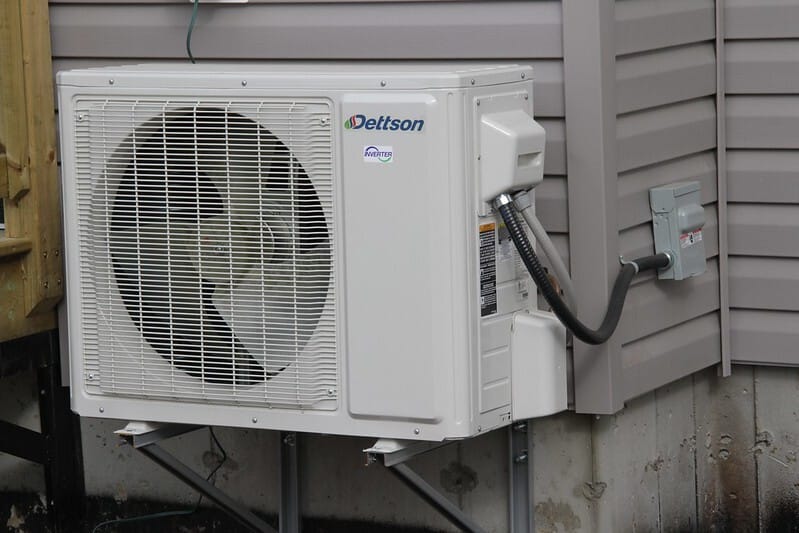
Flickr/Green Energy Futures
If you have a heat pump, are you wondering where the electricity discount shows up on your bill and how much you’re saving? Here’s what we were told by an Eversource customer service rep:
The blue box at the top left of the second page of your Eversource bill will indicate you have the special rate if it says, “Rate R1HP-Residential Heat Pump.”
Just under that box is a table that lists your Current Usage in kilowatt hours (kWh).
The electricity discounts appear in the Delivery part of the bill, shown on the right hand side of the same page. There are two discounts:
Distribution Charge: Without the discount, the charge is $0.09655 per kWh; with the discount it is $0.05337, a savings of $0.04318 per kWh. Multiply that savings by the number of kilowatt hours you used during the month. In our real-life example, 1,404 kWh of electricity was used in January, saving $60.62.
Transmission Charge: Without the discount, that charge is $0.0454 per kWh. With the discount, it is 0.01412, a savings of $0.03128 per kWh. Based on usage of 1,404 kWh, the savings here was $43.92.
Total these two elements to get your savings – in our example, savings totalled $104.54 on the entire bill, a reduction of about 30 percent.
Trash disposal savings through composting

According to budget figures from the Department of Public Works, Framingham generates an estimated 15,600 tons of trash per year, with disposal costs of $131.50/ton (up from the earlier charge of $124/ton).
This trash includes about 45,000 pounds in food scraps per week (or 1,170 tons/year). In landfills, food waste contributes to emissions of methane, a potent greenhouse gas. Diverting this waste and composting would save the city an estimated $153,855 per year.
Right now, fewer than 900 households subscribe to Black Earth Compost’s food waste pickup service. Imagine what the city might save if more people joined! The City of Framingham is providing incentives for more residents to sign up. Join the city’s pilot
Cafeteria composting at Potter Road: Volunteers wanted!
Students in three grades at Potter Road Elementary School began separating food waste in the cafeteria last fall for pickup by Black Earth Compost. Potter Road Principal Alana Cyr wants to expand the effort and is seeking more volunteers on Tuesdays, Thursdays, and Fridays from 11:00 a.m.-12:30 p.m. Email [email protected] if interested.
Park, trail, and pond improvements in the budget
The mayor’s five-year Capital Improvement budget includes plans for design and construction on Waushakum Beach, the Farm Pond Floating Dock, a community garden at Bates Park, continued design and construction of the Chris Walsh Trail, an extension of the Cochituate Rail Trail at Saxonville Levee, improvements at Learned Pond and Simpson Park, and water quality improvements at Waushakum Beach and Lake Cochituate.
City Council forms new Environment and Sustainability subcommittee
With the recent city elections, bringing two new city councilors, new subcommittee assignments have been announced. The new Environment and Sustainability subcommittee now consists of Leora Mallach (District 7), Brandon Ward (District 2), and newly elected councilor Mary Kate Feeney (District 3). All have expressed support for sustainability issues we care about (see takeaways from our Candidates Climate Forum in our November 2025 issue). We look forward to working with them!
Best practices on using salt this winter

Winter’s not over yet, and more snow is expected. While salting your driveway, steps, and walks can make them safer, over-salting can accelerate wear, damage nearby vegetation, and increase polluted runoff into our local ponds and lakes, says Framingham Conservation Administrator Rebecca Nau. This in turn contributes to poor water quality and harmful algae growth.
Some best practices to reduce environmental impacts:
Salt does not remove snow. Shovel, sweep, or scrape driveways and steps thoroughly before applying salt. Using salt on packed snow or ice is less effective and increases runoff.
Apply salt sparingly and evenly. About 12 ounces, roughly one coffee mug, is enough to treat 200 square feet of pavement. More salt does not mean more melting.
Reuse what you can. After ice has melted, sweep up any remaining salt and save it for future use. This prevents excess salt from washing into storm drains.
Consider salt brine, a liquid solution that can be applied with a sprayer up to three days before a storm. Salt brine helps prevent snow and ice from bonding to pavement. It uses less salt overall, reduces runoff, and can be more effective than traditional rock salt. More in this helpful video from the Department of Conservation and Recreation (DCR).
UPCOMING EVENTS
Stay updated about events by visiting www.energizeframingham.org/events. You can sign up for email notifications by creating a profile (“Sign In/Join” button on the top right corner on the page).
Wed., Feb. 18, 6 p.m. City Council Planning and Zoning Subcommittee will hear an update from developer J & Company on its conceptual plans for 30 acres at Edgell and Edmands Roads in Nobscot. Rezoning and developing this land has been controversial; about half of it is wooded and abuts Nobscot Park, which is owned by the city. Some are calling on the city to purchase the land to add to the park. Meeting agenda and Zoom link.
Wed., Feb. 18, 8 p.m. City Council Environment & Sustainability Subcommittee meeting
At this meeting, held remotely, the subcommittee will engage in goal-setting. There will likely be an opportunity for the public to participate.
Wed., Feb. 18, 7-8 p.m. Solar without federal incentives: why it still works and what options exist
In this webinar, learn how solar works, what options are available, and how it can help lower energy costs. Register
Sun., Mar 1, 11:00 a.m.-2:00 p.m. Clean Energy Home Tour -- Focus: SOLAR SHINGLES!
This home has solar shingles, a whole-house heat pump, a mini-split heat pump, a heat pump dryer and water heater, and induction range, an electric vehicle and chargers, and battery-electric yard tools. Register for an email with the house address and specific information about parking, etc. Coffee and snacks will be provided.
Sun., Mar. 1, 2-5 p.m. Framingham Repair Cafe
Have something that needs fixing or mending? Repair Café can fix clothing, lamps, small appliances, computers/other electronics, bikes, batteries, toys, jewelry, and more. There is also a station for sharpening non-serrated knives, scissors and garden tools. If you know what parts are needed, try to bring them. Sign up (optional) to get notifications of future events.
SAVE THE DATES
Wed., Apr. 8, 8 a.m. - 5 p.m. 2026 MassEnergize Climate Leaders Conference
Bentley University, Waltham
A full-day gathering of 250+ climate leaders from across Massachusetts. Attend dynamic sessions, learn practical tools, and network with organizers, municipal staff, students, advocates, and others committed to accelerating local climate solutions. Register and pay
Thurs., Apr. 9, 8 a.m. - 12 p.m. MassEnergize Post-Conference Deep Dive Workshops
Bentley University, Waltham
Sign up for one of the following (conference rate $85):
The Secret Sauce to Ramping Up Community Engagement: Your first $10k
Social Media & Outreach in Action
Sat., Apr. 25, 11 a.m. - 3 p.m. EARTH DAY
Framingham Centre Common (at Edgell Road/Vernon Street).
Stop by Energize Framingham’s table! Rain date May 2, 11 a.m. - 3 p.m.
IN THE NEWS
Framingham
Newly accessible Framingham MA nature trail adds boardwalk, bridges (MetroWest Daily News)
The updated Carol Getchell Trail features ADA-compliant pathways and viewing platforms, connecting residents of all abilities to the Sudbury River corridor.
Massachusetts/Region
Solar
Small-scale solar panels could see a breakout year in New England (Boston Globe/Inside Climate News)
This could be a breakout year for plug-in solar, with more than 20 states currently considering legislation, including Massachusetts, Maine, Vermont, New Hampshire, and Rhode Island. Currently, plug-in is typically allowed only if customers secure special agreements with their utility, keeping major retailers like Home Depot and Costco from selling the units. Proposed legislation would remove those contract requirements and update electrical codes, making plug-in solar easier for homeowners, renters, and apartment dwellers to adopt.
Related: To Lower Electricity Costs, Consumers Quietly Install DIY Solar (Bloomberg News)
High energy costs endanger climate initiatives
Affordability is scrambling energy politics in Massachusetts (Canary Media)
Everyone agrees that Massachusetts has an energy bill crisis. Some blame the cost of building renewable energy and the transmission lines needed to carry it, and seek to trade off long-term climate goals in the name of “affordability.” Others blame volatile natural gas prices and the expense of replacing aging pipes. Still others point to utilities’ profit margins.
Healey says state will use $180m to temporarily cut Massachusetts electric bills (Boston Globe)
Facing surging utility costs, Gov. Maura Healey said the state will temporarily cut electric bills by as much as 15 percent by repurposing “compliance” payments collected from utilities and electricity suppliers when they fail to buy a certain amount of renewable energy in a given year. These payments will effectively flow back to rate payers rather than fund municipal and state clean energy and efficiency projects. Critics cast the measure as a gimmick that would do nothing to address rising utility costs long-term.
The state can accelerate the move away from natural gas with one move (opinion) (CommonWealth Beacon)
As gas becomes more expensive, the Department of Public Utilities faces a choice: lead a transition away from gas, or let gas utilities trap customers in a failing system,” writes Audrey Schulman, formerly of HEET (the organization partnering with Framingham on its geothermal network).
Heat pumps
Boston is piloting a new type of heat pump that's as easy to install as a window AC (WBUR)
Putting in a heat pump, or even a mini-split, usually requires complicated, expensive and disruptive work. Meet the window heat pump. It's compact, hangs over a windowsill, can be installed in less than half an hour, and plugs into a standard 120 volt outlet — no HVAC technician or electrician required. The Boston Housing Authority is piloting them in a 100-unit housing complex.
More NYC Housing Authority Apartments to Get Climate-Friendly Heat Pumps
More than 700 homes in a Queens housing complex will switch to electric heating and cooling, which officials say will reduce pollution and offer more reliable service than NYCHA’s aging, fossil fuel-powered boilers.
Offshore wind reprieve
Offshore wind showed up big during the East Coast’s brutal cold (Canary Media)
Data from January shows that the nation’s two operating utility-scale offshore wind farms — Vineyard Wind in Massachusetts and South Fork Wind in New York — performed as well as gas-fired power plants and better than coal-fired facilities, helping to keep electricity flowing during the extreme weather stretch.
Judge Hands Trump a Fifth Loss in His Effort to Halt Offshore Wind Projects (New York Times)
A ruling on the Sunrise Wind project off the coast of New York joins four previous rulings allowing work to continue on Vineyard Wind off Massachusetts, Revolution Wind off Rhode Island, Empire Wind off New York, and Coastal Virginia Offshore Wind off Virginia.
Judge says construction on Vineyard Wind can resume (WBUR)
The $4.5 billion Vineyard Wind project is 95% done. Once fully operational, it's 62 turbines will be able to generate up to 800 megawatts of renewable electricity — enough to power about 400,000 homes in the region.
Massachusetts, Nova Scotia announce partnership on offshore wind (CT Mirror)
The two governments have agreed to explore a bi-directional flow of energy and make use of the Commonwealth’s ports, training and industry knowledge.
Hydropower
New power line provided little juice to New England during Sunday’s storm, frigid temperatures (Boston Globe)
The good news: After nearly 10 years, a new power line from the Canadian border to Lewiston, Maine, will provide the New England grid with hydroelectric power generated by Hydro-Québec. Unfortunately, during January’s cold snap, Hydro-Québec kept the electricity for its own customers’ needs as it faced significant demand to keep lights and heating going in its home province. As a result, the New England grid was forced to fire up oil-fueled turbines to fill the gap.
National/General Interest
The Climate Benefit of Decluttering Your Digital Life (Time)
Every sent message, recorded video, and voice note has an energy impact. Data from our devices must be transferred to servers stored in data centers. Those servers require electricity — and environmental resources including water.
Electric vehicles
EVs Are Quietly Cleaning Up The Air. This New Study Proves It (Inside EVs)
A study from the University of Southern California’s Keck School of Medicine used satellite data to confirm that zero-emission cars lead to cleaner air. For every 200 new zero-emissions vehicles registered in a California neighborhood between 2019 and 2023, nitrogen dioxide levels dropped by 1.1%.
The Firewall Against Chinese Cars Is Cracking (The Atlantic)
Last year, for the first time in a long time, the world’s biggest seller of electric vehicles wasn’t Tesla. It was the Chinese auto giant BYD. The company makes high-tech electric and hybrid cars and sells them at low prices. Canadian Prime Minister Mark Carney announced that his country would open the door to China’s cheap cars, and the cars may even be manufactured in the U.S.
Trump administration unlawfully suspended EV charger infrastructure program, U.S. judge rules (CNBC)
The ruling is a victory for 20 Democratic-led states that sued over the action. More from the Sierra Club
Environmental regulations repealed
Trump's EPA will stop regulating greenhouse gases, setting up a legal fight (NPR)
The EPA rescinded the 2009 Greenhouse Gas Endangerment Finding, the central scientific finding that underpins much of the nation's climate pollution rules. The endangerment finding stemmed from a section of the Clean Air Act focused on regulating vehicle emissions. So, the EPA is also ending rules to reduce climate pollution from cars and trucks. The EPA’s final rule is almost certain to lead to years of court battles that will end up before the U.S. Supreme Court.
The Trump administration has secretly rewritten nuclear safety rules (NPR)
The sweeping changes, not made available to the public, slash hundreds of pages of requirements for security at the reactors.
Energy Dept. Says It Is Canceling $30 Billion in Clean Energy Loans (New York Times)
Data centers
Amid Rising Local Pushback, U.S. Data Center Cancellations Surged in 2025 (Heatmap)
Across the country, scores of communities — including some of the same areas that have rebelled against new wind and solar farms — are blocking or banning proposed data centers. The most cited concerns were water use by these facilities, followed by energy consumption, higher electricity prices, and worries about noise. (Requires a free account to access full article).
Home electricity bills are skyrocketing. For data centers, not so much. (Yale Climate Connections)
In just two years, starting in 2022, residential electricity prices rose by 10%, while commercial prices increased by only 3%, and industrial electricity prices fell by 2%.
ABOUT US
Energize Framingham provides climate education, outreach, and advocacy to promote a healthy, equitable, and resilient community.
Have a tip for us? Email [email protected].
In case you missed it… Back issues!
Editors: Nancy Fliesler and Aimee Powelka
